
DUI / DWI
California DUI Programs Explained: AB 541, AB 1353, SB 38 & the Wet Reckless

Someone at the courthouse said “AB 541,” or “AB 1353,” or “SB 38,” and handed you a piece of paper, and now you’re staring at a bill number wondering what the California legislature has to do with your next several months of Tuesday nights. Fair question. California names its DUI education levels after the laws that created them, so people get ordered into “an AB 1353 program” with basically zero explanation of what that is. This is general information, not legal advice, but here’s the plain-English map: which program is which, how long each one runs, and why the online class you found in about four seconds probably won’t count here.
First, what a “DUI program” means in California
In California, court-ordered DUI education is called a “DUI Program,” and every legitimate one is licensed by the California Department of Health Care Services — DHCS. That’s the load-bearing word: licensed. DHCS sets the rules and licenses the providers, but the programs are administered county by county. So a provider has to be accepted in the county that’s handling your case. One that’s fine in your county isn’t automatically fine in the next one over.
The four levels below are all DHCS DUI Programs. What separates them is length — and length is set by your conviction, not by you. More on that in a second.
The four California DUI program levels, by their bill names
Here’s the part nobody explained. California has four common DUI education levels, and people usually hear them by their bill nicknames. Each one now has its own detailed page — jump straight to the one your court order names:
- Wet reckless program (SB 1176) — about 12 hours. The shortest one, tied to a “wet reckless” conviction: an alcohol- or drug-related reckless driving charge that’s often a reduced version of a DUI. If your attorney got the charge knocked down to a wet reckless, this roughly 12-hour program is commonly what comes with it.
- First offender / AB 541 — 3 months, about 30 hours. The standard program for a typical first DUI. When people picture “DUI school,” this is usually the one — around three months of classes totaling about 30 hours.
- First offender, high BAC / AB 1353 — 9 months, about 60 hours. Same first-offender bucket, longer program. Courts commonly order this when a first DUI came with a BAC of 0.20% or higher, or when you refused a chemical test. It’s the nine-month, roughly 60-hour version — and it’s the one people search for most, because “9 month DUI program” is alarming when you weren’t expecting it. (There’s also a shorter 6-month AB 762 version for a mid-range BAC — covered on the same page.)
- Multiple offender / SB 38 — about 18 months. For a second or subsequent DUI. Longer, more involved, and typically ordered when there’s a prior on your record.
Some counties also use a longer 30-month program for certain repeat offenders. Whether that applies to you is exactly the kind of thing to confirm with your court or attorney rather than assume from a blog post — this one included.
You don’t get to choose your level
This is the thing everyone quietly hopes is untrue: you can’t just pick the short one. Which program you’re ordered into is set by your conviction, your BAC, and your prior record. It’s written into your sentencing terms and your DMV requirements. The 12-hour wet reckless program isn’t a “starter option” you opt into — it goes with a specific conviction. Same logic for the rest.
So before you enroll in anything, read your actual paperwork and confirm the exact program name with your court, clerk, or attorney. If the order says AB 1353 and you sign up for an AB 541, you’ve done the wrong program, and you’ll likely have to start over. Again, general information here, not legal advice — your court order is what controls.
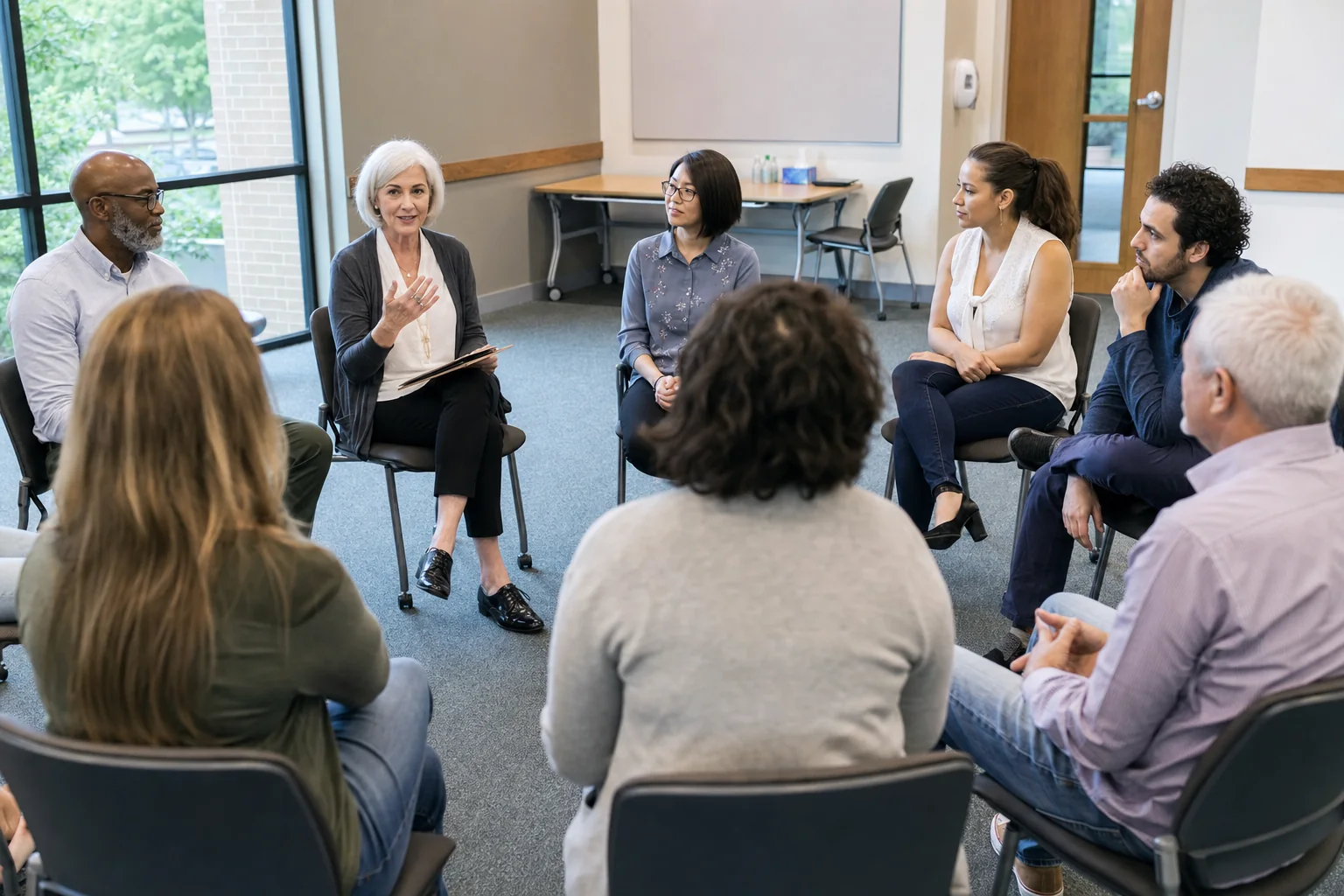
California program schedules may combine education, group counseling, and individual interviews through a DHCS-licensed provider.
Why the online class you found won’t count in California
Here’s the trap, and it catches a lot of people. You search, an out-of-state site promises a fast, self-paced “online DUI class,” you pay, you knock it out on the couch — and then California won’t accept it.
DHCS is blunt about this: internet DUI classes do not meet California’s requirements. To satisfy a California court or the DMV, you generally have to attend a DHCS-licensed program, which is in-person and classroom-based. A licensed California program may deliver some sessions by live video, but that’s not the same as a self-paced internet course, and there’s no valid out-of-state or 100%-online substitute. If a website is selling you a nationwide online DUI class, it is almost certainly not a DHCS-licensed California program.
We hammer this point because it’s the single most expensive mistake in this niche: paying for a class that was never going to count, then paying again for the right one while a deadline ticks. Confirm the provider is DHCS-licensed and accepted in your county before you spend a dollar.
Getting your license back: the SR-22 piece
Completing the program is usually only part of the deal. To reinstate your license after a DUI, California generally also requires an SR-22 — a certificate your insurer files with the DMV proving you carry the required coverage — and it typically has to stay in place for about three years. It’s a separate requirement from the education program, and it commonly bumps up your insurance cost for that stretch. Your DMV requirements and your attorney control the specifics here, so confirm the details with them instead of trusting a general figure.
How to find a DHCS-licensed program (and actually confirm it)
The clean way to do this: start from the official DHCS list of licensed providers, filter to the county handling your case, and match the program to the level your order names. We’ve pulled the DHCS directory link and laid out all four levels on our California DUI classes page, so you can see the provider list and the level breakdown in one place. If you want the wider picture of how court-ordered DUI education works — assessments, hours, what “approved” even means — start with how DUI/DWI classes work.
Two habits worth building: confirm the exact program name against your court order, and confirm the provider is accepted in your specific county. Courts and the DMV don’t grade on effort — finishing the wrong level simply doesn’t count.
How we help
We help you find DHCS-licensed options that may fit your order and confirm your court and county will accept a specific program before you enroll — so you’re not the person who finished 60 hours of the wrong class. We don’t decide your level, and no court endorses any particular paid provider; your order, the DHCS county list, and your attorney are what count. Tell us your county and what your paperwork says, and we’ll help you sort out your options.
One last time, because it matters: this is general information, not legal advice, and the numbers here are typical ranges that vary by county and by case. Before you enroll, confirm the exact program and provider with your court, clerk, or attorney and check the DHCS county list. Get that one step right and the rest of this gets a lot less stressful.
Get help verifying a court-ordered class
Tell us what you were ordered to complete and we’ll help you compare options against your court order, deadline, and certificate requirements before you enroll.
Get started