
North Carolina DWI programs · ADETS
What Is ADETS in NC? The 16-Hour Class, the $160 Fee, and the Assessment Levels
ADETS is North Carolina’s Alcohol and Drug Education Traffic School, a DWI education class of at least 16 hours. You can’t sign up for it directly. Everyone convicted of DWI first gets a substance use assessment from an authorized provider, and that assessment places you in ADETS or in one of four treatment levels. Your license stays revoked until the DMV receives your certificate of completion.

Quick answer: who, how long, cost, and online
ADETS is at least 16 hours and costs $160 by statute. The required assessment costs $100. It is for first offenders with a BAC of 0.14% or less, no test refusal, and no substance use disorder. Anyone else goes to treatment, at least 20 hours over 30 days or more. The assessment must be face-to-face, in person or by live audio-and-video telehealth. The state publishes no approval for generic self-paced online DWI courses.
Step 1: the DWI substance use assessment
G.S. 20-17.6 says the DMV cannot restore your license after a DWI until it receives a certificate of completion. To earn one, you get a substance use assessment and then complete ADETS or treatment, depending on the result. What NC DHHS says about the assessment:
- It must be done by a DHHS-authorized DWI provider, face-to-face: in person or by telehealth with audio and video.
- Bring your court papers. The assessor must have a copy of your “Complete Driving History” from the DMV.
- It uses a state-approved standardized test and a clinical interview, and follows American Society of Addiction Medicine criteria. If you are not given a diagnosis, you are referred to education (ADETS).
- The provider must tell you about other local providers who offer the service you need. It may not charge you to transfer your case to another in-state provider.
Step 2: ADETS or treatment — the five levels
| Level | Minimum length | Who is placed here |
|---|---|---|
| Level I — ADETS | At least 16 hours of classroom instruction (PRIME For Life) | No substance use disorder found, no prior DWI conviction, BAC 0.14% or less, and no refusal of the chemical test |
| Level II — Short-term outpatient | At least 20 contact hours over at least 30 days, scheduled weekly | The assessment suggests substance abuse, or factors such as a BAC of 0.15% or more or a test refusal point to treatment |
| Level III — Longer-term outpatient | At least 40 contact hours over at least 60 days, scheduled weekly | Meets minimal conditions for a substance dependence diagnosis |
| Level IV — Day or intensive outpatient | At least 90 contact hours over at least 90 days | The assessment confirms substance dependence |
| Level V — Inpatient or residential | Inpatient care, then continuing care to reach the 90-day minimum | Same diagnosis as Level IV, when outpatient treatment has not worked or a structured setting is needed |
The statute sets the floor. G.S. 122C-142.1(c) requires treatment instead of ADETS if your test showed 0.15 or more, you have a prior impaired-driving conviction, or the assessment finds a substance use disorder. The state rules add that a test refusal points to treatment, and NC DHHS says the same. Treatment groups are limited to 20 clients and must be led by trained therapists.
What ADETS is like
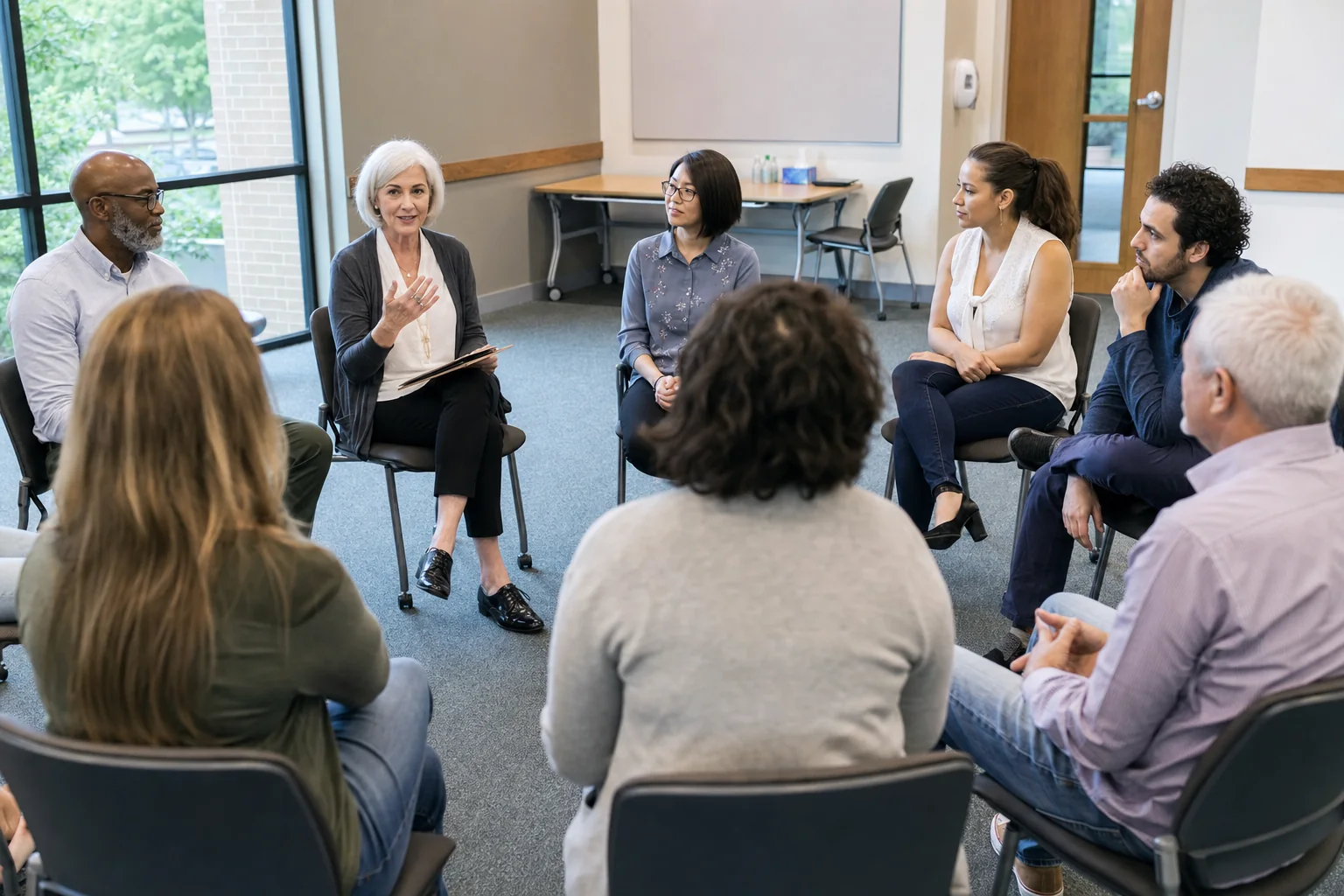
NC DHHS says every ADETS in the state uses the PRIME For Life curriculum, which aims to prevent alcohol and drug problems and the health problems they cause. State rules (10A NCAC 27G .3803) require at least 16 hours of classroom instruction, plus up to three extra hours for things like an initial student assessment or a summary conference. The school must give you written notice of the time and place of every class, and you must attend the first and last sessions in order. Classes are supposed to be scheduled around most work and school conflicts. Instructors must be certified substance abuse counselors, licensed clinical addictions specialists, or certified prevention consultants.
What it costs
| Service | Fee set by G.S. 122C-142.1(f) | Notes |
|---|---|---|
| DWI substance use assessment | $100 | Paid to the assessing agency. With more than one offense, you pay one assessment fee per certificate needed, but get only one assessment |
| ADETS | $160 | Paid to the school |
| Treatment | $75 fee to the treatment facility | Actual treatment costs are set by the provider and level of care |
A provider may require the fee before it issues your certificate of completion. Under G.S. 122C-146, an area (public) facility may not deny you service because you cannot pay. Providers may also charge for special services and for handling out-of-state cases.
Online and virtual. The assessment must be face-to-face, in person or by live audio-and-video telehealth, with an authorized NC provider. The state rules describe ADETS as classroom instruction, and the state publishes no approval for generic self-paced online DWI courses. Ask your authorized provider how its classes are delivered, and make sure the format will earn a certificate of completion before you pay.
How completion reaches the DMV
When you finish, your provider issues a certificate of completion. Under G.S. 122C-142.1(e), the provider sends the original to NC DHHS, which checks it for accuracy and forwards it to the NC Division of Motor Vehicles. Your revocation lasts until the DMV receives that certificate, even after the revocation period itself ends. You are also not eligible for a limited driving privilege if the only thing keeping your license revoked is a missing certificate (G.S. 20-17.6(e)).
Finding an authorized provider
Only DHHS-authorized providers can do the assessment and issue the certificate. Search the state’s provider database by county. If you can’t find the service in your county, NC DHHS suggests checking neighboring counties.
Source & accuracy: the certificate-of-completion requirement comes from G.S. 20-17.6. The ADETS-or-treatment criteria, the $100 / $160 / $75 fees, the certificate routing and the out-of-state option come from G.S. 122C-142.1. The limited driving privilege rules come from G.S. 20-179.3. The 16-hour minimum, the class rules and the five service levels with their minimum hours come from the NC DWI services rules (10A NCAC 27G .3800). The face-to-face assessment rule, the PRIME For Life curriculum, the refusal rule, the treatment-group limits and the out-of-state e-508 process come from NC DHHS. Your court order and your authorized provider control, so confirm details with them. We are an independent directory. We do not run programs, we cannot enroll you, and none of these links are affiliate links. This is general information, not legal advice. Sources: NC DHHS — Driving While Impaired, NC DHHS — ADETS, 10A NCAC 27G .3800 (DWI services rules, PDF), G.S. 122C-142.1, G.S. 20-17.6, G.S. 20-179.3, NC DHHS provider database.